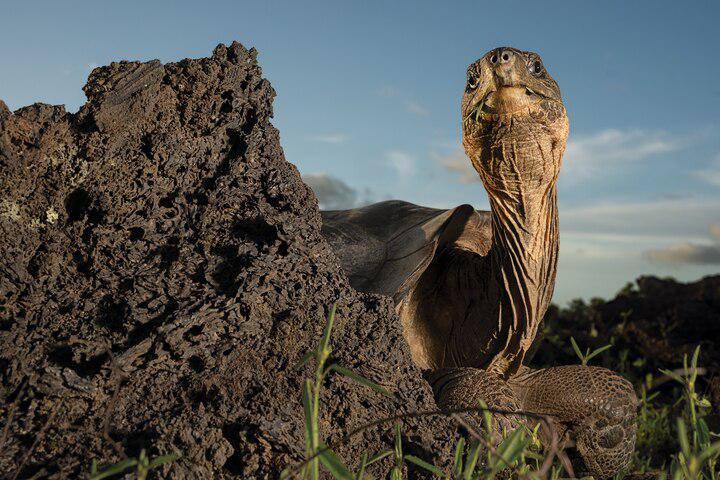
The Galápagos Islands were named for the giant tortoises that have inhabited the archipelago for millions of years. Animals with mixed lineages like this one populate a remote corner of Isabela Island, which has emerged as a hotbed for genetic research.
2025-08-14 3655词 晦涩

There, they’d stack their captives upside down in the hold like nesting bowls. Tortoises could live up to a year without sustenance. “They neither eat nor drink, nor is the least pains taken with them,” wrote Owen Chase, the ship’s first mate. “They are strewed over the deck, thrown under foot, or packed away in the hold, as it suits convenience.” The Essex took more than 60 of Floreana’s tortoises, which had the curved shells known as saddlebacks and were, Nickerson wrote, “the most rich flavourd and delicious meat I have ever met with.” Then the ship set off for the Pacific whaling grounds, where, a month later, it was rammed by a whale, a disaster that provided the inspiration for Herman Melville’s Moby-Dick. The sailors salvaged as many tortoises from the foundering ship as they could fit on their small whaleboats, eating them—and eventually, each other—on their ill-fated voyage back to the South American mainland. The other tortoises sank with the ship or floated away.
免责声明:本文来自网络公开资料,仅供学习交流,其观点和倾向不代表本站立场。