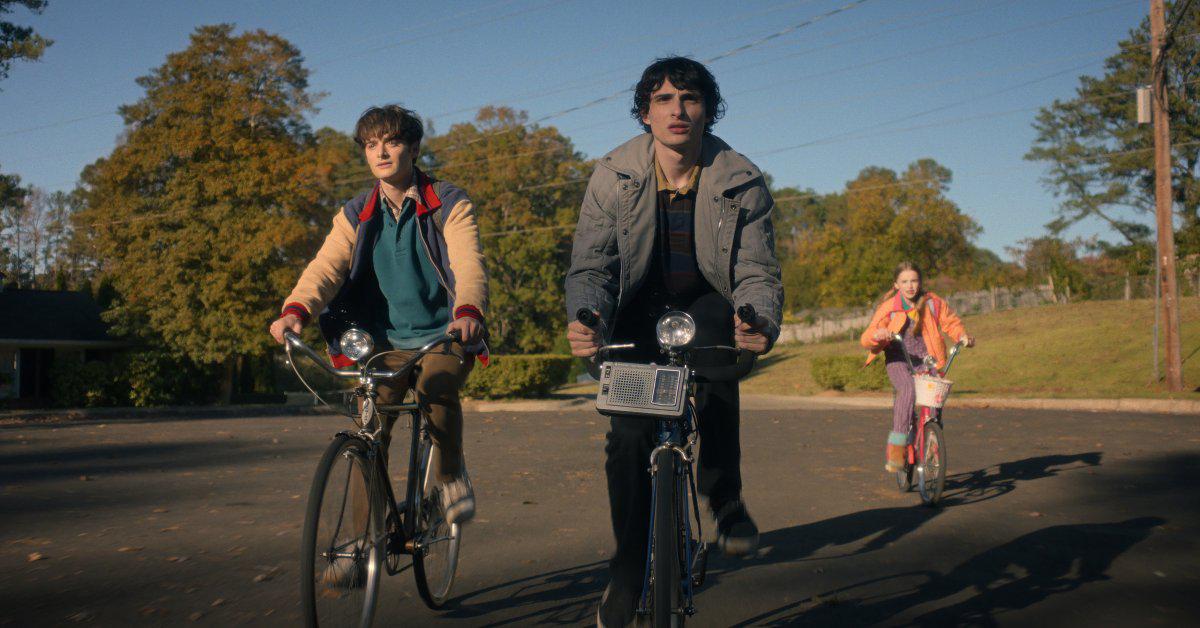
How the nostalgic, well-made treat we couldn't help devouring amid the traumas of 2016 devolved into a content factory
2025-12-26 2344词 晦涩

The next day, as a military coup failed in Turkey, Netflix debuted Stranger Things. Created by relatively unknown identical twins Matt and Ross Duffer, and featuring just one marquee star in Winona Ryder—whose mere presence tied the show to Gen X cult classics like Beetlejuice, Heathers, and Mermaids—it landed as a family-friendly gift from Planet ’80s, wrapped in blinking Christmas lights and soundtracked by the Clash. Amid what seemed to many, at the time, to be a chaotic blip rather than an extreme new normal for the American experience, people sought distraction to survive the next few months. Also, at that early stage in the transition from linear to streaming, summer was still a dead zone on the TV calendar and the ability to binge a full new season of programming had yet to lose its novelty. Add in adorable kids, a nostalgic setting, scary monsters, references that lit up the pleasure centers of Stephen King, John Carpenter, and Steven Spielberg fans, and of course Stranger Things became Netflix’s first homegrown mega-franchise. But nearly a decade later, in the prolonged lead-up to the series finale, it’s hard to appreciate it as anything but the bloated franchise it’s become.
免责声明:本文来自网络公开资料,仅供学习交流,其观点和倾向不代表本站立场。